

;)


How Hardox Wear Plates Reduce Maintenance Costs in Industrial Equipment
Maintenance costs in heavy industries can quickly become expensive and difficult to manage.What starts as a routine parts replacement can escalate into extended downtime, emergency procurement and delays that affect the entire operation. For companies in quarrying, construction, recycling, and materials processing, this is a familiar story, and one that a smarter material choice can fundamentally change.
That material choice, for a growing number of industrial operators, is Hardox wear plate. And once you understand how it performs under real working conditions, the economics become very hard to argue with.
The Hidden Cost of Inferior Wear Steel
Standard mild steel does a passable job when abrasion loads are light. But push it into a crusher liner, a dump truck body, or a conveyor chute handling sharp aggregate, and it degrades fast. The surface wears unevenly, component dimensions change and the equipment becomes less efficient, often consuming more fuel and increasing wear on surrounding parts.
This is where the true cost of cheap material reveals itself. It’s not just the price of the part itself that you’re replacing, but the labour to swap it, the crane time to access it, the production hours lost while the machine is down, and the wear imposed on adjacent components by a part that was no longer performing as designed. When these costs are added across multiple machines over a year, the financial impact can be significant.
What Makes Hardox Different
Hardox wear-resistant steel is engineered with a specific balance of hardness and toughness that sets it apart from generic abrasion-resistant steels. Hardness resists surface wear, but without sufficient toughness, a hard steel will crack under impact, which is just as catastrophic as wear. Hardox achieves both simultaneously, maintaining structural integrity even in applications where impact and abrasion occur together.
The Hardox plate grades available span a wide range of applications. Hardox® 500 Tuf, for example, delivers exceptional hardness alongside guaranteed toughness, making it ideal for tipper bodies, mining buckets, and heavy wear liners. Hardox® HiAce is engineered specifically for environments where both abrasion and corrosion are present, offering service life up to 2.7 times longer than standard alternatives. For high-temperature applications, Hardox® HiTemp maintains its hardness properties where conventional quenched and tempered steels simply cannot.
This product breadth matters. Selecting the correct grade for a specific application is not a minor detail; it’s the difference between a component that lasts a season and one that lasts several years.
The Maintenance Cost Equation
Here’s the practical reality: a wear part made from quality Hardox material may cost more upfront than a standard steel equivalent. But the total cost of ownership tells a very different story.
Consider a crushing operation running two shifts daily. A mild steel jaw liner might need replacement every eight weeks. The equivalent component in a premium wear-resistant grade could easily last four to five times longer. That’s fewer shutdowns, fewer hours of technician labour, less crane mobilisation, and far fewer interruptions to production planning. Over a year, the savings compound substantially.
There’s also a less obvious benefit: consistency. When wear parts maintain their dimensions and geometry for longer, the equipment continues operating as designed. Feed rates stay stable, energy consumption remains predictable, and output quality holds steady. This kind of operational consistency is difficult to put a precise figure on, but anyone who has managed a high-throughput industrial facility knows exactly how valuable it is.
Where the Gains Are Most Visible
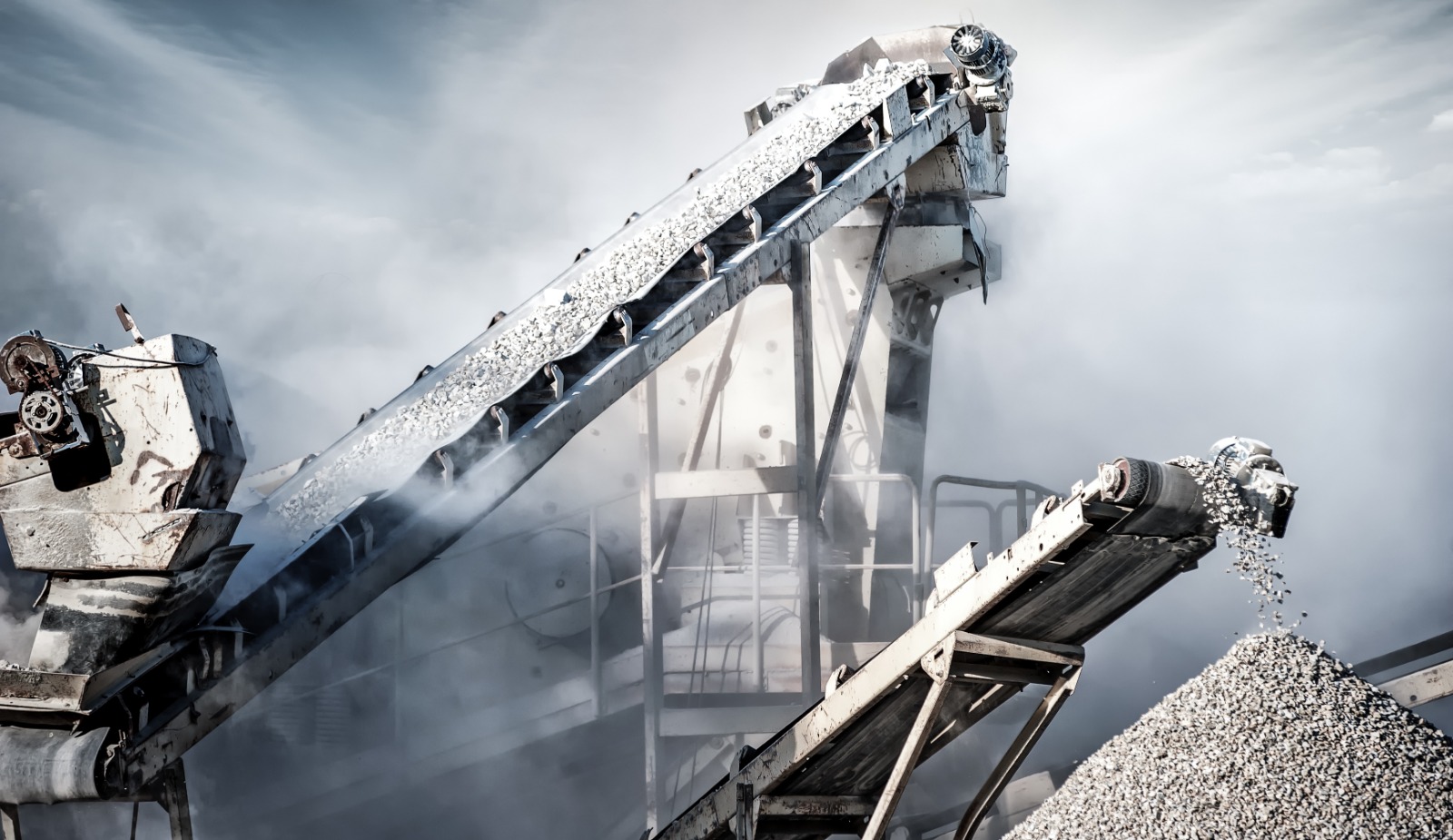
In quarrying and cement production, liner plates, blow bars, and screen decks fabricated from Hardox grades consistently outperform standard alternatives. The abrasive nature of limestone, granite, and clinker demands steel that can take sustained punishment without rapid surface loss.
In recycling, shredder hammers and side liners face some of the most unpredictable impact conditions in any industry, processing everything from scrap cars to demolition rubble. The toughness properties of Hardox steel allow these components to absorb impact without cracking or breaking, which is critical in an application where the incoming material is never uniform.
Road building and materials processing equipment like mixers, pavers, conveyors, hoppers, also benefit enormously. The combination of heat, abrasion, and repeated mechanical loading in these environments makes material selection one of the most impactful decisions an equipment manager can make.
A Long-Term View on Short-Term Decisions
The companies that consistently run lower maintenance costs aren’t necessarily doing something dramatically different from their competitors. They’re making better material decisions, earlier in the procurement process, and tracking the results carefully enough to know what works.
Specifying a Hardox plate where the application demands it is one of those decisions. It will not eliminate maintenance, nothing will, but it will make maintenance more predictable, less frequent, and considerably less expensive over time.
What We Offer at AWP
At AWP, we are the official Hardox® Wearparts Centre in UAE, supplying a comprehensive range of premium steel materials including Hardox® 500 Tuf, Hardox® HiAce, Hardox® HiTemp, Strenx®, and Duroxite®, all available to industrial operators across Dubai and the wider UAE. As authorised suppliers and fabricators, we help our clients select the right grade for their specific application and fabricate it with precision. If you’re looking to reduce maintenance costs and extend the service life of your industrial equipment, reach out to our team at sales@awp.ae or call +971 549 941 518.